
Structure
Confirm page count, finished size and intended use.
Brochures, reports and booklets need more than clean print. Page count, stock, folding, binding and final use all affect how the piece should be produced.
A strong brochure or report is a system of choices: size, page count, paper, colour, binding and how the piece will be handled. Those decisions should be made before production begins.
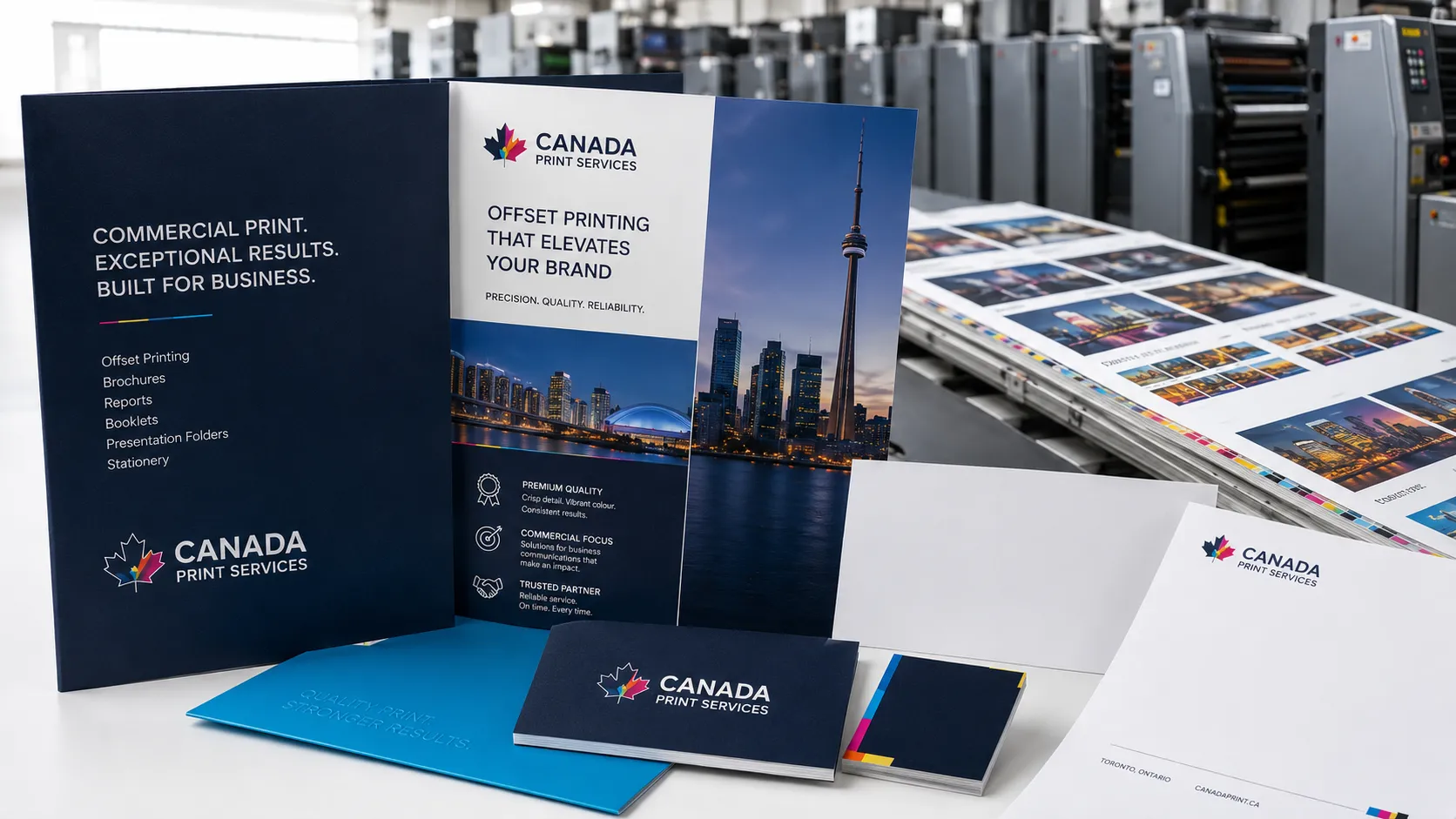
A closer look at the print jobs this service is built to handle.
Exact specifications depend on quantity, use, artwork and finishing.
A brochure, annual report or booklet is really a set of interlocking decisions: page count, finished trim size, paper weight and finish, binding method, and how the piece folds or opens. Each one affects the others. Change the page count and the spine width changes with it; change the stock weight and a saddle-stitched piece might need to move to a different binding method to lie flat.
We work through that sequence before production starts rather than discovering a conflict on press. For a report or catalogue, that usually means confirming the finished size and binding method first, since those two choices constrain almost everything else: paper options, cover stock, and how many pages can realistically sit inside a given spine.
Multi-page work also benefits from imposition planning done early: a 24-page booklet imposed correctly can save a meaningful amount of paper waste over the run compared with a layout that wasn't checked against the press sheet size.
Whether it's a one-off annual report or a brochure that reorders every quarter, we treat the specification as something worth getting right once, so repeat runs stay predictable instead of needing to be re-solved from scratch each time.
Confirm page count, finished size and intended use.
Choose paper, cover, colour and binding around the piece.
Coordinate print, folding, stitching or binding.
Pack and coordinate the finished run for its destination.
Send the quantity, finished size, files and finishing requirements. If the job is still being planned, we can start from the intended use.