
Plan early
Confirm finishing before print specifications are locked.
Folding, binding, stitching, laminating, die-cutting and other post-press decisions shape how the finished piece looks, works and holds up in use.
Post-press work is organized around function: binding, folding and specialty finishing are planned as part of the job, not treated as an afterthought once the sheet is printed.
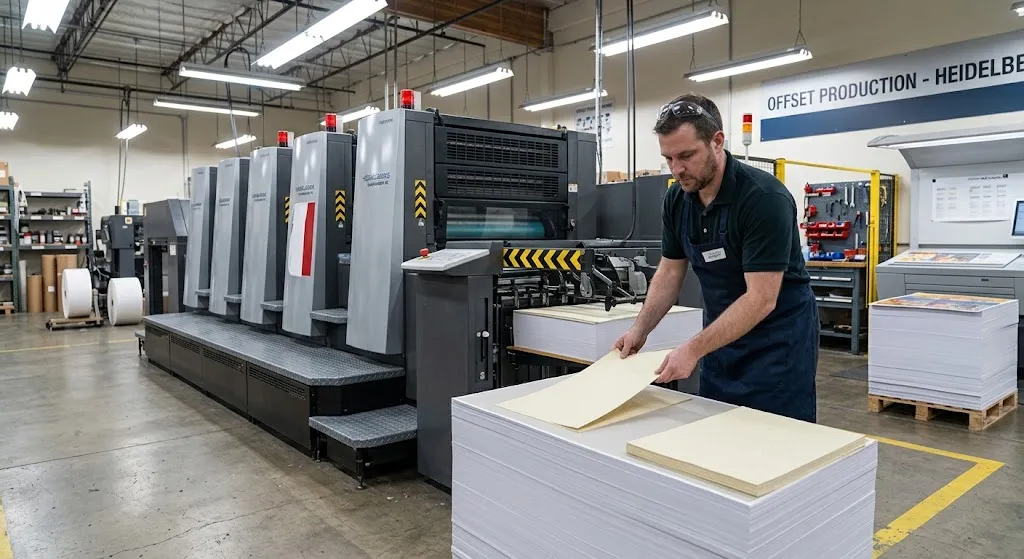
A closer look at the print jobs this service is built to handle.
Exact specifications depend on quantity, use, artwork and finishing.
A printed sheet isn't a finished piece until it's been folded, bound, trimmed or otherwise finished, and the finishing method has to be decided before the sheet is printed, not after, because it affects imposition, bleed, grain direction and margin allowances.
Binding choice alone changes several upstream decisions. Saddle stitching needs pages in multiples of four and works best under roughly 64 pages before the spine gets unwieldy; perfect binding handles thicker booklets but needs extra spine margin; wire and Cerlox binding both need a different edge allowance again. Get the binding decided early and the rest of the layout can be built around it correctly the first time.
Specialty finishing such as die-cutting, laminating, round-cornering, perforating and numbering adds production steps that need their own lead time and tooling, so we flag those requirements at the quoting stage rather than after the job is already on press.
The goal of finishing isn't just appearance. A well-bound booklet holds up to repeat handling; a properly scored fold doesn't crack; a laminate protects a piece that's going to be handled a lot. We plan finishing around how the piece will actually be used, not just how it needs to look on day one.
Confirm finishing before print specifications are locked.
Allow for folds, trims, binding edges and final size.
Coordinate the printed sheet with the selected post-press path.
Review the completed piece as a finished product, not only a printed sheet.
Send the quantity, finished size, files and finishing requirements. If the job is still being planned, we can start from the intended use.