
Review the quantity
Confirm whether digital or offset is the better fit for the run.
For shorter quantities and quick turnarounds, digital printing gets the job produced quickly without giving up quality. Note: we print larger commercial runs of 500+. If you’re looking to print 100 copies of a sales sheet, a retail store is likely a better fit.
Digital printing is most valuable below the quantity where offset plate and makeready costs make sense, or when a job needs variable data, a fast turnaround or a smaller test run before a larger production commitment.
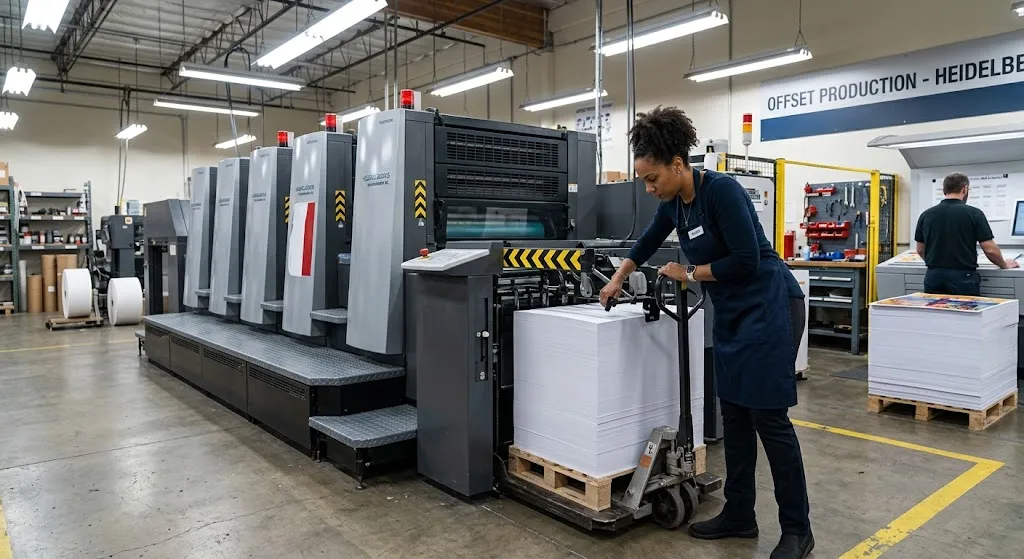
A closer look at the print jobs this service is built to handle.
Exact specifications depend on quantity, use, artwork and finishing.
Digital and offset aren't competing technologies so much as two tools for two different jobs, and the right one usually comes down to quantity. Digital carries no plate or makeready cost, so a short run stays economical in a way it wouldn't on offset, but that per-unit cost advantage disappears as the quantity climbs.
We review the quantity, repeat frequency and finishing requirements before recommending a production path. A 250-piece run of an updated sell sheet is typically a better fit for digital; the same piece reordered at 5,000 copies a year usually makes more sense on offset, where the plate and colour setup are built once and the unit cost drops.
Digital also earns its place when a job needs something offset can't do as efficiently: variable data, personalization, or a fast proof run before committing to a full offset order.
The goal is the same either way: match the production method to the job, rather than defaulting to one process regardless of quantity.
Confirm whether digital or offset is the better fit for the run.
Stock, colour and finishing are planned around the job.
No plates or makeready. The job moves straight to production.
Post-press and delivery are coordinated with the printed piece.
Send the quantity, finished size, files and finishing requirements. If the job is still being planned, we can start from the intended use.