
Review the run
Quantity, finished size and repeat frequency are reviewed first.
For larger and repeat quantities, offset printing gives commercial projects the production discipline, stock flexibility and consistency needed to keep a program controlled from run to run.
Offset is most valuable when setup is justified by the quantity, consistency requirements and finished specification. The goal is not to force every job onto offset; it is to use it where it creates the right production outcome.
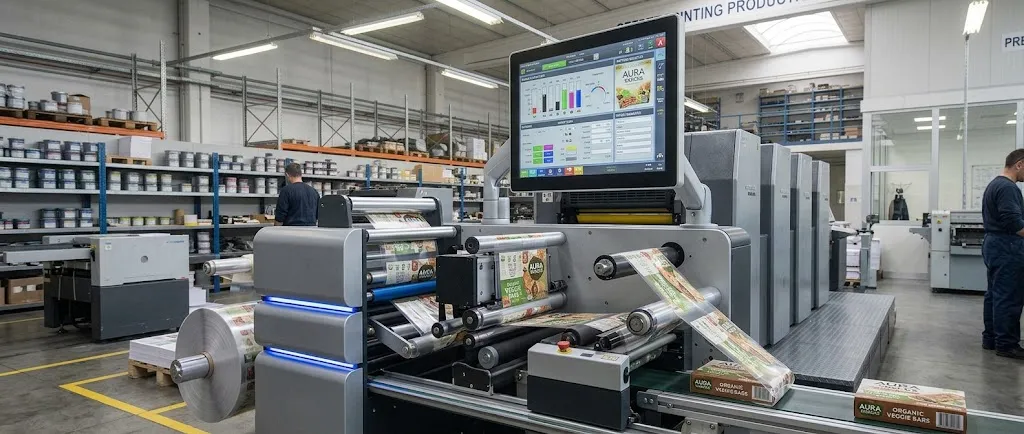
A closer look at the print jobs this service is built to handle.
Exact specifications depend on quantity, use, artwork and finishing.
Offset earns its cost when the quantity, repeat frequency or colour requirements justify the plate and makeready. Below a certain run length, digital is usually the better economic choice; above it, offset's per-unit cost drops fast and the colour holds steady across the whole run in a way variable digital toner can struggle to match sheet to sheet.
The calculation isn't only about page count. Stock weight and finish, the number of colour separations, whether a job runs 4/4 or spot colour, and how many times a year the piece reorders all shift where that crossover point sits. A 5,000-piece annual reprint of a corporate brochure often makes more sense on offset than the same quantity split across four smaller digital runs, because the plates and colour setup only get built once and the specification stays locked for every future reorder.
We review that math before quoting rather than after. If a job is genuinely better suited to digital, whether a short run, a version-heavy piece or a one-off, we'll say so, because setting up an offset run for a job that doesn't need it just adds cost without adding value.
What offset does reliably well: broad paper stock flexibility, consistent spot and process colour across long runs, and finishing compatibility with folding, binding, die-cutting and other post-press work that many higher-volume commercial pieces need anyway.
Quantity, finished size and repeat frequency are reviewed first.
Stock, colour, imposition and finishing are planned together.
The run is managed for repeatable colour and controlled output.
Post-press and delivery are coordinated with the printed sheet.
Send the quantity, finished size, files and finishing requirements. If the job is still being planned, we can start from the intended use.