
Map the use
Understand who uses the form and what information must appear.
Forms and cheques are working documents. They need the right format, numbering, copies, stock and repeat specification so each new run stays predictable.
Business cheque and form printing for medium and larger organizations focuses on repeatability, clarity and production control.
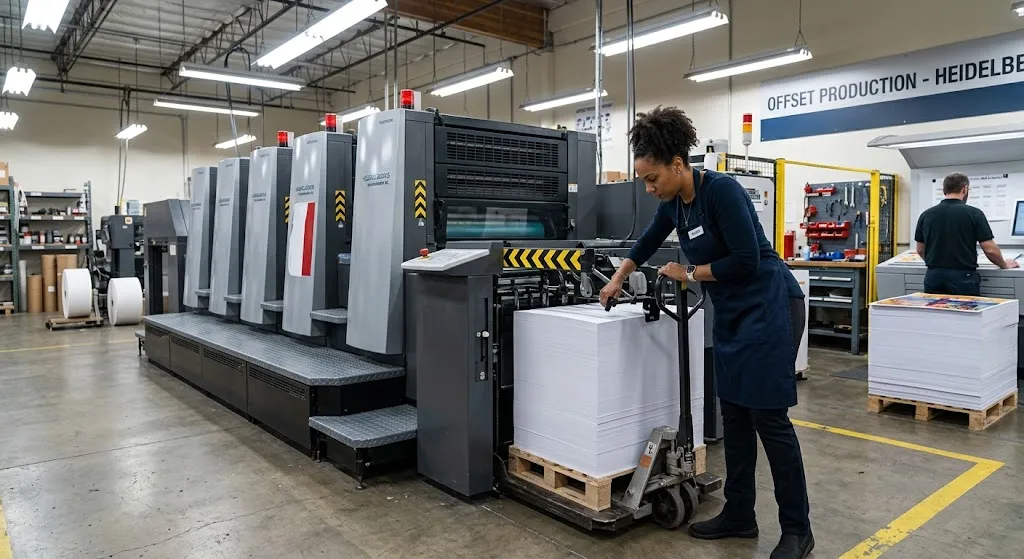
A closer look at the print jobs this service is built to handle.
Exact specifications depend on quantity, use, artwork and finishing.
Business forms and cheques get judged by a different standard than marketing print: they need to work correctly every time, match the last run exactly, and hold up to routine handling. A form that's slightly off-spec from the previous batch creates real operational friction for whoever has to use it.
That's why we treat the first run of a form or cheque program as the point where the specification gets locked: size, numbering sequence, copy count for NCR sets, stock, and security features for cheques. Every reorder after that is a straightforward repeat rather than a fresh set of decisions.
NCR and multi-part forms carry their own production requirements: carbonless stock has to be sequenced correctly through the press, and numbering needs to be tracked so there are no gaps or duplicates across a run. Cheque printing adds a further layer of care around stock security and numbering control that we build into the production plan from the first order.
For organizations running these as recurring operational print rather than one-off jobs, the value is in not having to re-explain the specification every time. Once it's documented, a reorder is just a reorder.
Understand who uses the form and what information must appear.
Confirm size, parts, numbering, stock and repeat requirements.
Print and finish the run to the approved specification.
Use the established specification to simplify future production.
Send the quantity, finished size, files and finishing requirements. If the job is still being planned, we can start from the intended use.